


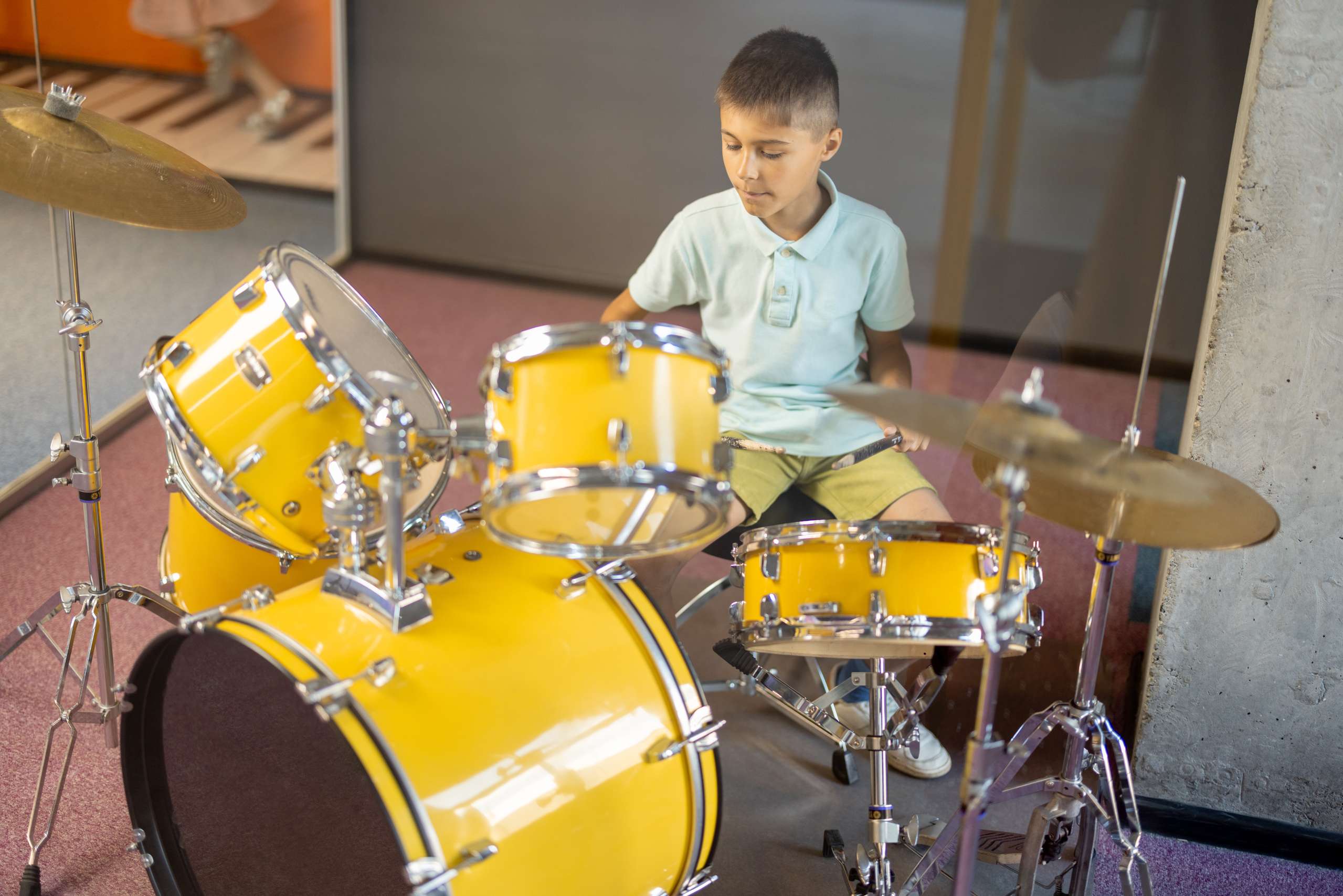
When life gets too stressful, there’s no better way to find peace than playing a musical instrument. Listening to music, playing music, and observing the movement of the instrument itself all serve to keep you in the moment and distracted from your concerns. The movement of playing instruments also stimulates the production of endorphins which naturally make you feel better. Obviously, this is not a cure all, but studies have shown that even a few moments of playing an instrument each day can significantly decrease anxiety and stress.
Aside from this in-the-moment calming effect, listening to or playing music on a daily basis can also enhance the memory, concentration, and problem-solving areas of the brain. All of these can be really helpful if you’re navigating a big life transition, like changing careers or losing a loved one. Plus, the daily act of playing an instrument can provide structure and stability during uncertain times. The act of playing itself can also feel meditative, encouraging you to process your emotions through music rather than words. And the best part? You don’t need any experience to try it.
On a physical level, besides enhancing the fine motor dexterity and posture, it has also been found to reduce the severity of pain. In addition, research has shown that rhythmic motions can significantly reduce blood pressure and heart rate, inducing a state of relaxation. Many instruments can be modified to accommodate physical impairments and injuries, so instead of feeling incapacitated, one could enjoy a soothing experience. The resonating effect of playing the instrument also has a profound effect on our bodies. Not only does it improve circulation, but also eases the rigidity of muscles. All this enables the medium of sound to heal our bodies without us even realizing it.
In the emotional realm, it encourages a great deal of self-compassion if practiced with a non-judgmental attitude. Making mistakes early on helps with learning patience and with recognizing and accepting failure and in other areas and with other people. Music brings people together when it is shared, even in a casual setting. This keeps people from feeling disconnected and from losing their sense of commonality with others through the universal medium of song and rhythm. In a group or in solitude, it encourages one to be thankful for minor accomplishments, such as mastering a difficult musical section, and increases one’s self-value with each achievement. This emotional aspect helps to make the practice a constant companion in one’s life.
At the end of the day, using music for healing purposes shows that it’s not a band-aid to fix everything, but a steadfast method to heal the mind and the body in the midst of turmoil. It allows you to revisit the basics and once again find that all it takes is plucking a string or touching a key to open a door that leads to calmness if we just allow ourselves to enter. Incorporating music into your life will help you realize that sometimes the answers to healing don’t come from the outside, but instead from the inside, one melody at a time, forming a symphony to heal and strengthen.